Exploring Barrier-Free Travel: Compare the Best Accessible Cruise Options for 2025
An accessible cruise can feel like a contradiction until you see one done well: ramps aligned, cabin doors wide enough, staff trained to listen, and shore plans built with reality in mind. For wheelchair users, older travelers, Deaf guests, blind passengers, and anyone managing fatigue or chronic illness, the difference between a good sailing and a frustrating one lives in the details. That is why comparing ships, itineraries, and policies before booking matters far more than glossy brochure photos.
Outline
- Why accessible cruising matters and what travelers should evaluate first
- How major cruise lines compare for 2025 across mobility, hearing, visual, and general support needs
- What to expect from accessible cabins, public spaces, dining, entertainment, and onboard services
- How ports, tender operations, and shore excursions can shape the entire experience
- Which cruise styles fit different travelers, plus practical booking advice and a final takeaway
1. Why Accessible Cruising Matters More Than Ever
Accessible cruising matters because a cruise is not a single hotel stay or a single train ride. It is a chain of experiences linked together: transport to the port, check-in, boarding, cabin use, restaurants, entertainment venues, emergency procedures, disembarkation, and shore visits. If one link fails, the journey can become tiring very quickly. That is why accessibility at sea should be understood as a whole system rather than a short list of features.
The audience for accessible cruising is broader than many brochures suggest. It includes travelers who use manual or power wheelchairs, guests who rely on scooters, people with hearing or vision loss, passengers with autism or sensory sensitivities, older adults who walk slowly, and travelers with conditions such as multiple sclerosis, arthritis, long-term pain, heart disease, or reduced stamina. A person does not need to identify as disabled to benefit from thoughtful design. Wider corridors, better signage, quieter dining choices, and easier boarding procedures help many travelers, including families moving with strollers or multi-generational groups traveling together.
There is also a legal and operational reason to take the topic seriously. Cruise accessibility exists at the intersection of ship design, port infrastructure, national rules, and company policy. In the United States, accessibility obligations on cruise ships have been shaped in part by the Supreme Court case Spector v. Norwegian Cruise Line, which confirmed that disability law can apply to foreign-flagged ships operating in U.S. waters, although there are limits where ship safety or internal operations are involved. In practical terms, that means travelers may find meaningful protections, but they should still verify details directly because compliance does not always look identical from one ship to another.
Another important point is supply. Accessible cabins are a tiny fraction of total inventory on most ships, so they often sell out earlier than standard rooms, especially on popular summer and holiday itineraries. Shore excursions that can accommodate wheelchairs are even more limited. This creates a simple but important planning rule: the earlier you research, the more options you keep. Waiting can turn an exciting search into a game of compromises.
When evaluating an accessible cruise, focus first on the basics:
- Is the ship itself a good fit, not just the cruise line brand?
- How many accessible cabins are available in your category and location?
- Will the itinerary rely on tender ports, which can create barriers?
- Are accessible excursions offered and easy to reserve?
- Can the line clearly explain boarding, bathroom layout, bed height, and emergency communication?
Think of it this way: the ocean may be the backdrop, but the real story is built on practical choices. A well-matched cruise can feel liberating, almost like watching the horizon open with every passing mile. A poorly matched one can make every deck feel narrower than it is.
2. Comparing the Strongest Accessible Cruise Options for 2025
No single cruise line is perfect for every traveler, so the smartest comparison for 2025 is not “Which brand is best?” but “Which line fits my needs, pace, and budget?” Among the large mainstream operators, Royal Caribbean, Celebrity Cruises, Norwegian Cruise Line, Holland America Line, Disney Cruise Line, and MSC Cruises are often part of the conversation. Each brings strengths, trade-offs, and differences between individual ships.
Royal Caribbean is often attractive for travelers who want variety. Its fleet is large, accessible cabin choices are available across multiple ship classes, and its biggest ships usually offer more elevators, more venue options, and more chances to spread out. For mobility users, that extra choice matters because crowded spaces can be just as exhausting as inaccessible ones. The trade-off is scale: mega-ships can also mean long distances from cabin to dining room to theater. Travelers who fatigue easily may love the options but dislike the mileage.
Celebrity Cruises tends to appeal to travelers who want a more refined atmosphere and a calmer onboard rhythm. Many guests value its contemporary cabin design, strong service reputation, and premium feel. For some accessible travelers, that quieter tone is a practical advantage, especially when sensory overload is a concern. The main trade-off is price, which is often higher than mass-market lines, and some destination-heavy itineraries may still include ports where access ashore is less predictable.
Norwegian Cruise Line stands out for flexible dining and a less formal daily structure. That freedom can be especially useful for travelers managing medication schedules, fluctuating energy levels, or the need to avoid peak crowds. It can be easier to dine when you feel ready instead of dressing to a fixed timetable. The downside is that flexibility does not solve every physical barrier, so travelers still need to ask ship-specific questions about cabin layout and excursion access.
Holland America Line is frequently favored by older travelers who appreciate a steadier pace, traditional service, and destination-focused itineraries. Many guests find the onboard environment easier to navigate emotionally and socially because it feels less rushed. Disney Cruise Line, by contrast, shines for families who need both accessibility and multigenerational entertainment. Its staff reputation, family-centered organization, and attention to communication can be a major advantage, though fares are often premium and availability can be tight.
MSC Cruises often attracts travelers with lower entry pricing, especially in some markets. That value can be appealing, but accessibility experiences can vary more noticeably by ship, departure region, and customer-service coordination. In other words, price may get you on board, but verification gets you peace of mind.
A useful way to compare these lines is by matching them to travel style:
- For maximum onboard choice: Royal Caribbean
- For a more polished premium feel: Celebrity Cruises
- For schedule flexibility: Norwegian Cruise Line
- For mature, quieter pacing: Holland America Line
- For family travel with children: Disney Cruise Line
- For value-focused shoppers: MSC Cruises
The most important caution is this: accessibility is often better judged by ship class and itinerary than by logo alone. A newer ship may offer smoother access, better public-space design, and more modern room features than an older vessel from the same line. In 2025, the wisest travelers will compare individual ships with the same care they compare prices.
3. Cabins, Bathrooms, Dining, and Daily Life On Board
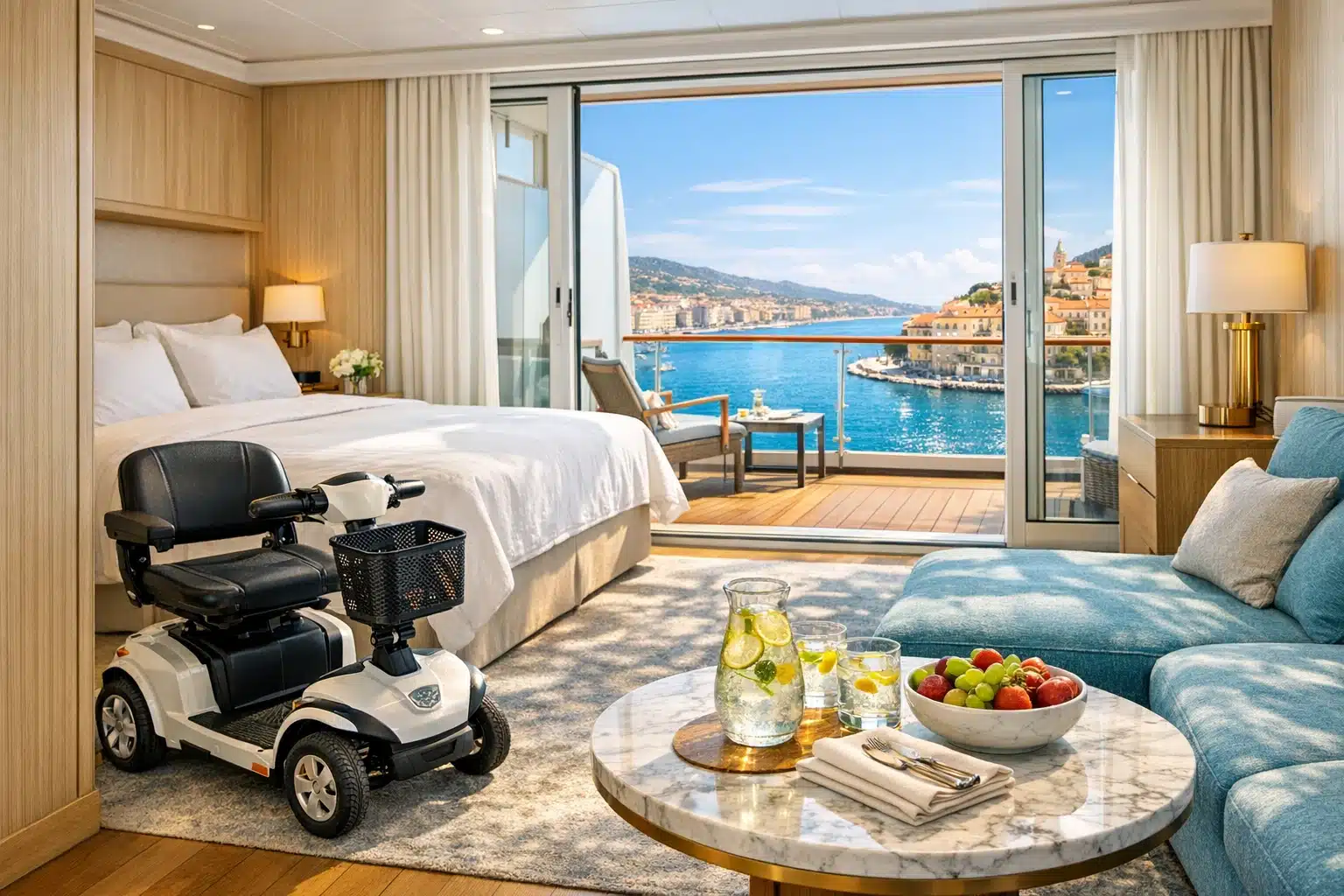
The accessible cabin is usually the heart of the cruise experience because it is the one space that truly belongs to the traveler. If that room works, the entire holiday feels easier. If it does not, every day starts with friction. Most cruise lines offer accessible staterooms designed with wider doorways, more turning space, bathrooms with grab bars, lower closet rods, and roll-in or transfer-friendly shower setups. Even so, “accessible” is not a universal measurement. One line may offer a generous bathroom turning radius, while another may technically meet access expectations but feel cramped once luggage, mobility equipment, and a companion are inside.
That is why dimensions matter. Ask for exact door width, bathroom layout, bed clearance, toilet-side transfer space, shower lip height, and whether a handheld showerhead is installed. These details are not fussy; they are decisive. A room that is almost right can still be functionally wrong. Travelers using power chairs or larger scooters should also confirm battery charging arrangements and whether equipment can fit without blocking emergency pathways.
Beyond the cabin, public spaces shape the rhythm of each day. Dining venues on most large ships are generally reachable by elevator, but not every table layout is equally practical. Buffet areas can be especially challenging because trays, narrow lanes, and crowd pressure do not combine well with mobility devices. Travelers who need more space may prefer main dining rooms, specialty restaurants, or room service at certain times. A flexible eating plan can preserve energy for the parts of the trip that matter more.
Entertainment accessibility also varies. Many lines provide some combination of assistive listening devices, visual alarms, captioning support on selected performances, and accessible seating in theaters. Guests with hearing loss should ask what is available on their specific sailing rather than assuming a fleet-wide standard. Blind and low-vision travelers may want to ask about braille signage, tactile cabin numbering, staff escort assistance, and accessible daily schedules. Service animals may be permitted, but documentation rules, relief-area arrangements, and destination-country requirements should be confirmed well before departure.
Look closely at these onboard features:
- Elevator placement and wait times during peak hours
- Pool lifts and access to spa or fitness areas
- Accessible seating in lounges and show venues
- Visual and vibrating alert systems in cabins
- Availability of refrigeration for medication or medical supplies
- Policies for CPAP machines, distilled water, or sharps disposal
One overlooked factor is pace. Some ships feel like floating cities, exciting but demanding. Others feel more contained and calm. Neither style is automatically better. The right choice depends on whether you want endless options or easier navigation. When travelers picture cruising, they often imagine sunsets and sea air. Wise travelers imagine turning radius, elevator distance, and the route to breakfast as well. That may sound unromantic, yet it is exactly the kind of realism that protects the romance of the trip.
4. Ports, Tendering, and Shore Excursions: Where Accessibility Is Often Won or Lost
Many accessible cruises look excellent on paper until the itinerary enters the conversation. A ship can be well designed, but the ports may not be. This is the point many first-time cruisers miss. Accessibility does not stop at the gangway. In fact, some of the hardest moments happen after the ship arrives, when passengers meet cobblestones, steep curbs, uneven piers, historic districts, limited accessible transport, or small tender boats bouncing between ship and shore.
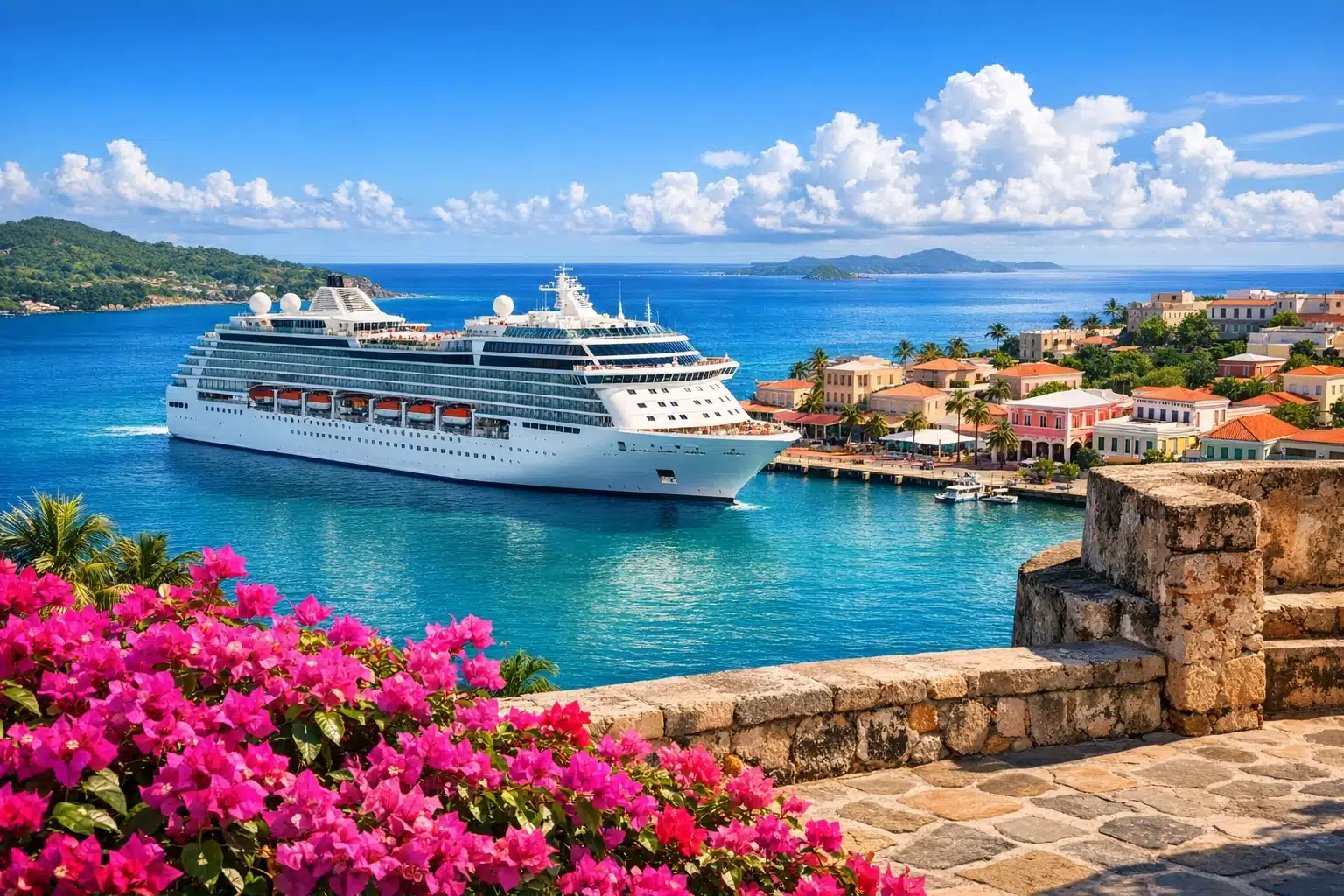
Tender ports deserve special attention. At these stops, passengers do not walk straight onto a pier; they transfer into smaller boats that shuttle them ashore. In calm weather, this can be manageable for some guests with limited mobility. In rougher conditions, it may be impossible or unsafe for many wheelchair users and difficult even for travelers who simply need a steady handrail. Cruise lines sometimes cannot guarantee tender access because sea conditions change quickly. A beautiful island stop can therefore become a “stay on board” day for some travelers.
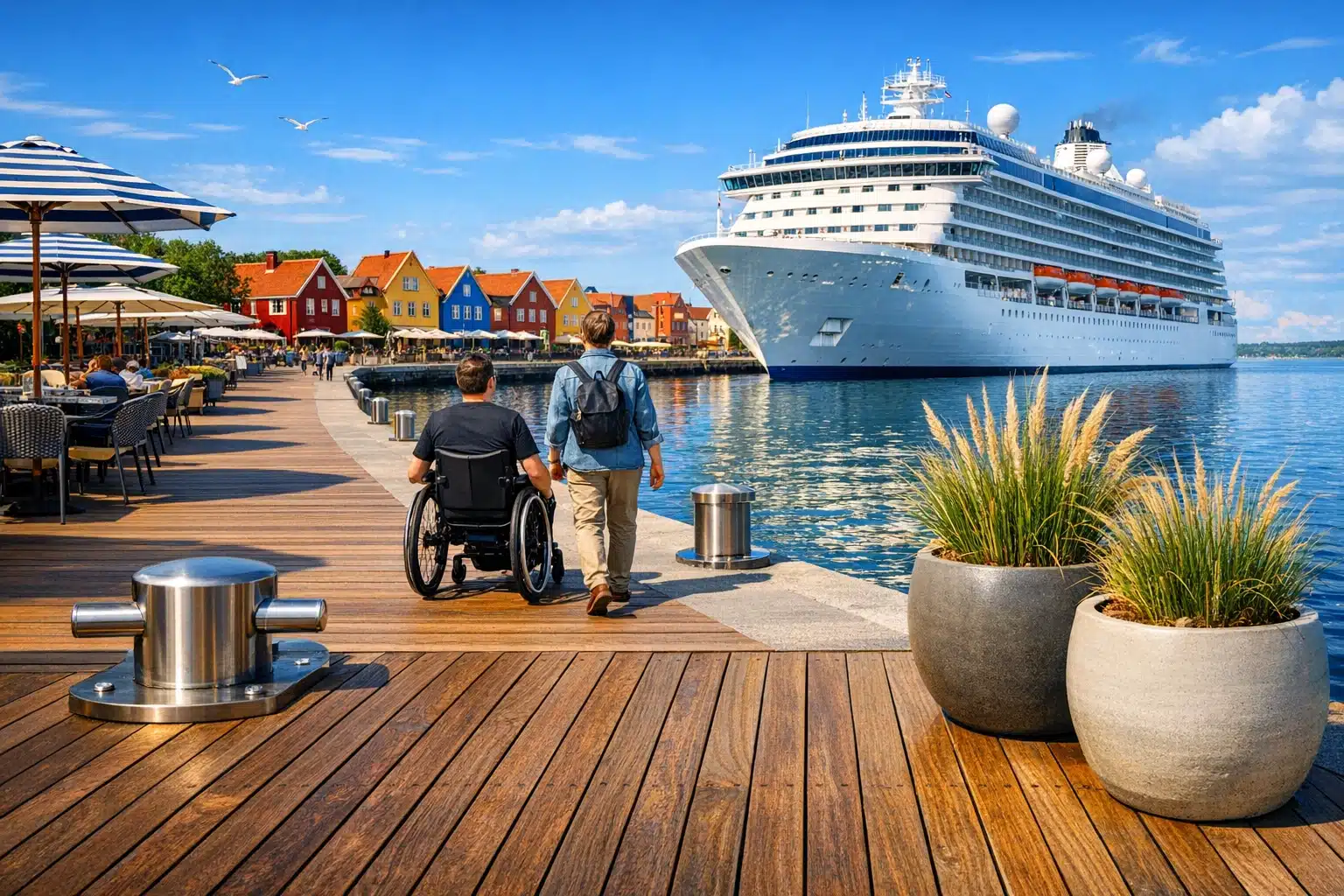
Docked ports are usually easier, but even then the local environment matters. Northern European cities may offer stronger public accessibility, smoother pavements, and better adapted transport than some older Caribbean or Mediterranean port areas, though exceptions exist everywhere. Alaska can be surprisingly workable in some towns because cruise infrastructure is well developed, yet nature-focused excursions may still be physically demanding. River cruise destinations can offer immersive city access, but older European streets may be challenging. In short, the destination photo tells only half the story.
Accessible shore excursions are improving, but supply remains limited. Some cruise lines label tours as wheelchair accessible, step-free, or easy pace, but those categories should always be read with care. A tour may be technically accessible while still involving long periods of sitting, limited adapted restroom access, or vehicle lifts that need advance arrangement. Travelers who require a hoist, a fully roll-in accessible vehicle, or guaranteed accessible restrooms should ask for specifics instead of relying on a short icon in the excursion listing.
Questions worth asking before you commit include:
- Is the port a dock or a tender stop?
- Does the excursion use an accessible coach or van with lift access?
- What are the pavement conditions at the destination?
- How long are the transfers, and are accessible restrooms available?
- Can mobility equipment be stored safely during transport?
- Is there a realistic backup plan if weather changes access conditions?
Some experienced travelers book independent accessible tours rather than ship excursions, especially in major ports with established adapted transport providers. This can offer more customization, though it also shifts more responsibility to the traveler. Timing becomes critical because missing the ship is a far bigger problem than missing a museum. For that reason, conservative planning is often the most relaxing choice. A great accessible port day is not the one with the longest itinerary. It is the one that leaves you feeling included rather than tested.
5. How to Choose the Right Cruise for Your Needs and Book with Confidence
Choosing the right accessible cruise for 2025 starts with honesty, not optimism. Travelers often know what they hope they can manage, but the better booking strategy is to start with what reliably works on an average day. If your energy drops after long walks, do not choose the biggest ship simply because it looks exciting online. If accessible shore time matters more than flashy entertainment, favor itineraries with docked ports and cities known for better infrastructure. If communication access is central, evaluate the line’s responsiveness before you pay a deposit. A slow, vague answer during the sales process usually does not become a perfect answer later.
Budget also deserves a realistic lens. Accessible travel is not only about fare price. You may need pre-cruise hotel nights, accessible transfers, specialized insurance, equipment transport, private excursions, or a companion traveling in the same cabin. A cheaper cruise can become more expensive when support is fragmented. A moderately higher fare may be the better value if it reduces friction at every step. Value, in accessible travel, often means reduced stress rather than reduced spending.
There are a few smart booking habits that consistently help:
- Reserve accessible cabins as early as possible
- Call the cruise line’s accessibility or special-needs team directly
- Request written confirmation of key accommodations
- Review deck plans, not just cabin photos
- Check port-by-port access, especially for tender stops
- Confirm medical equipment and service animal policies in advance
- Ask what happens if an accessible excursion sells out or is canceled
It is also wise to think in traveler profiles. A solo traveler using a manual wheelchair may value a compact premium ship with good staff support and simple navigation. A multigenerational family may prefer Disney or Royal Caribbean because children, grandparents, and a disabled traveler can all find their own rhythm. An older couple seeking quieter days may lean toward Holland America or Celebrity. A traveler who needs schedule flexibility for pain management may appreciate Norwegian’s looser dining structure. None of these matches are absolute, but they are useful starting points.
The best accessible cruise is rarely the one with the loudest marketing. It is the one that lets you move through the day with dignity, comfort, and fewer avoidable obstacles. For the target audience of this guide, that means choosing ships and itineraries that respect real bodies and real routines. A successful cruise should not ask you to become a different traveler once you board. It should meet you where you are, then carry you somewhere beautiful from there.
In the end, barrier-free travel at sea is not about perfection. It is about preparation, comparison, and clear-eyed decision-making. If you ask detailed questions early, match the ship to your daily needs, and treat the itinerary as seriously as the cabin, cruising can become one of the more rewarding ways to travel. The horizon is still the same wide line of possibility. The difference is that, with the right planning, more people can reach it comfortably.