Struggling to Walk? A New Support Device That May Help
Why Walking Problems Matter and What This Article Covers
When walking starts to feel uncertain, ordinary routines can become exhausting puzzles. A short trip to the kitchen, a curb outside the pharmacy, or a crowded hallway may suddenly demand planning, caution, and extra energy. That is why interest is growing around a new wave of support devices designed to improve balance, stability, and confidence rather than simply hold the body upright. For older adults, people recovering from injury, and anyone managing weakness or joint pain, these tools are worth a closer look.
Difficulty walking is not a small inconvenience. It can affect independence, mood, social life, and even long-term health. People who move less often become less strong, and that loss of strength can make walking even harder. It is a frustrating loop: less movement leads to lower endurance, reduced muscle support, and more fear of falling. Clinicians see this pattern in many settings, including arthritis care, stroke rehabilitation, Parkinsonian movement problems, nerve disorders, post-surgical recovery, and general age-related weakness. Walking trouble may come from pain, stiffness, poor balance, foot drop, muscle fatigue, reduced coordination, or simply the body working harder than it once did.
The issue is also highly relevant because falls are common, especially in later life. Public health guidance consistently points to fall prevention as a major priority for older adults, and walking support is one practical part of that effort. A device that helps improve step control or steadiness can matter not just for mobility, but for confidence. Confidence is not a soft extra here; it changes whether someone goes outside, shops independently, attends appointments, or keeps exercising.
This article is organized as a practical guide. Here is the roadmap: • first, what this newer type of support device actually is; • next, how it works in plain language; • then, how it compares with canes, walkers, rollators, and braces; • after that, who may benefit and how to use it safely; • finally, what to consider about cost, access, limitations, and real-world expectations. Think of it as a careful walk around the topic before you decide whether this kind of help deserves a place in your daily life.
What the New Support Device Is and How It Works
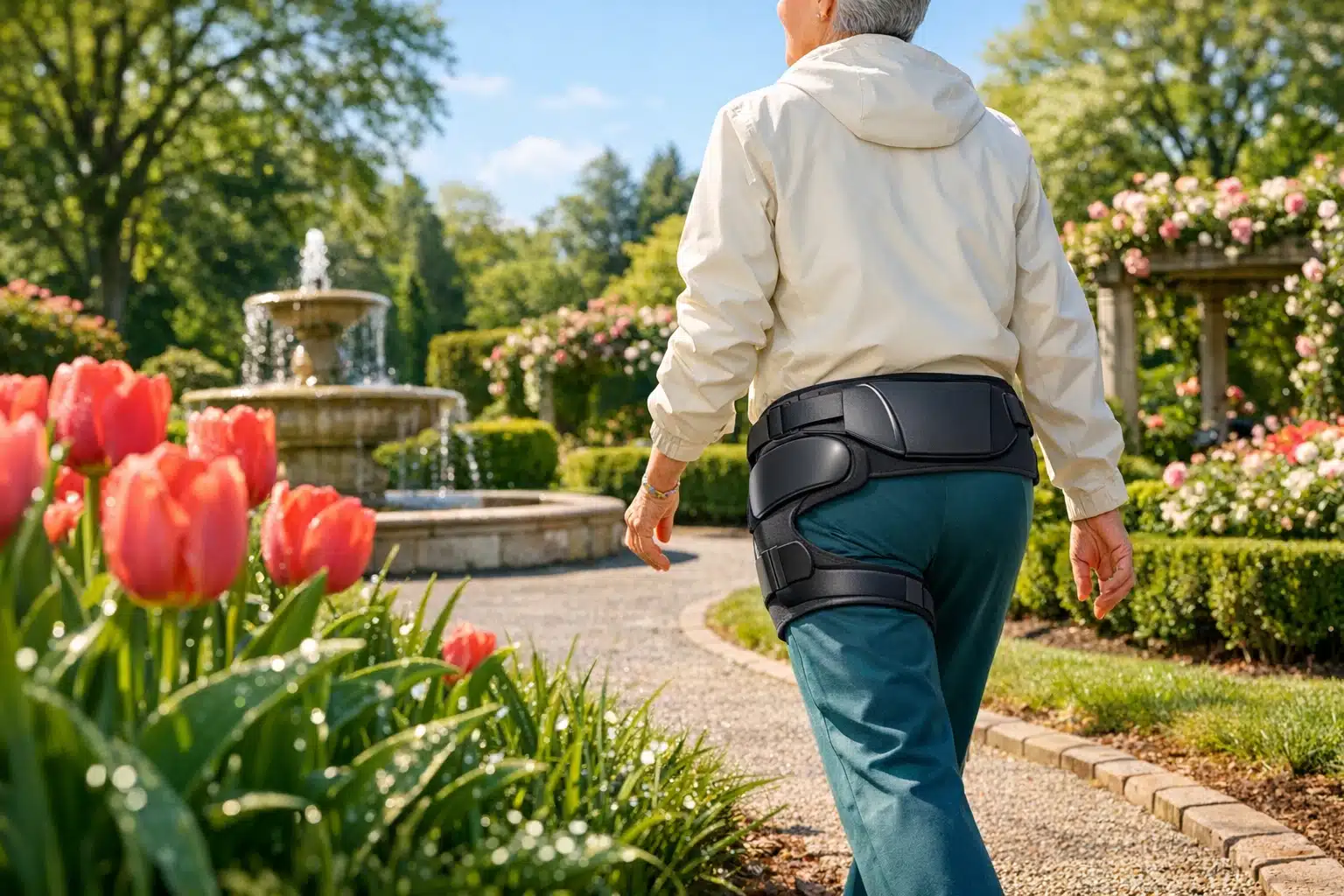
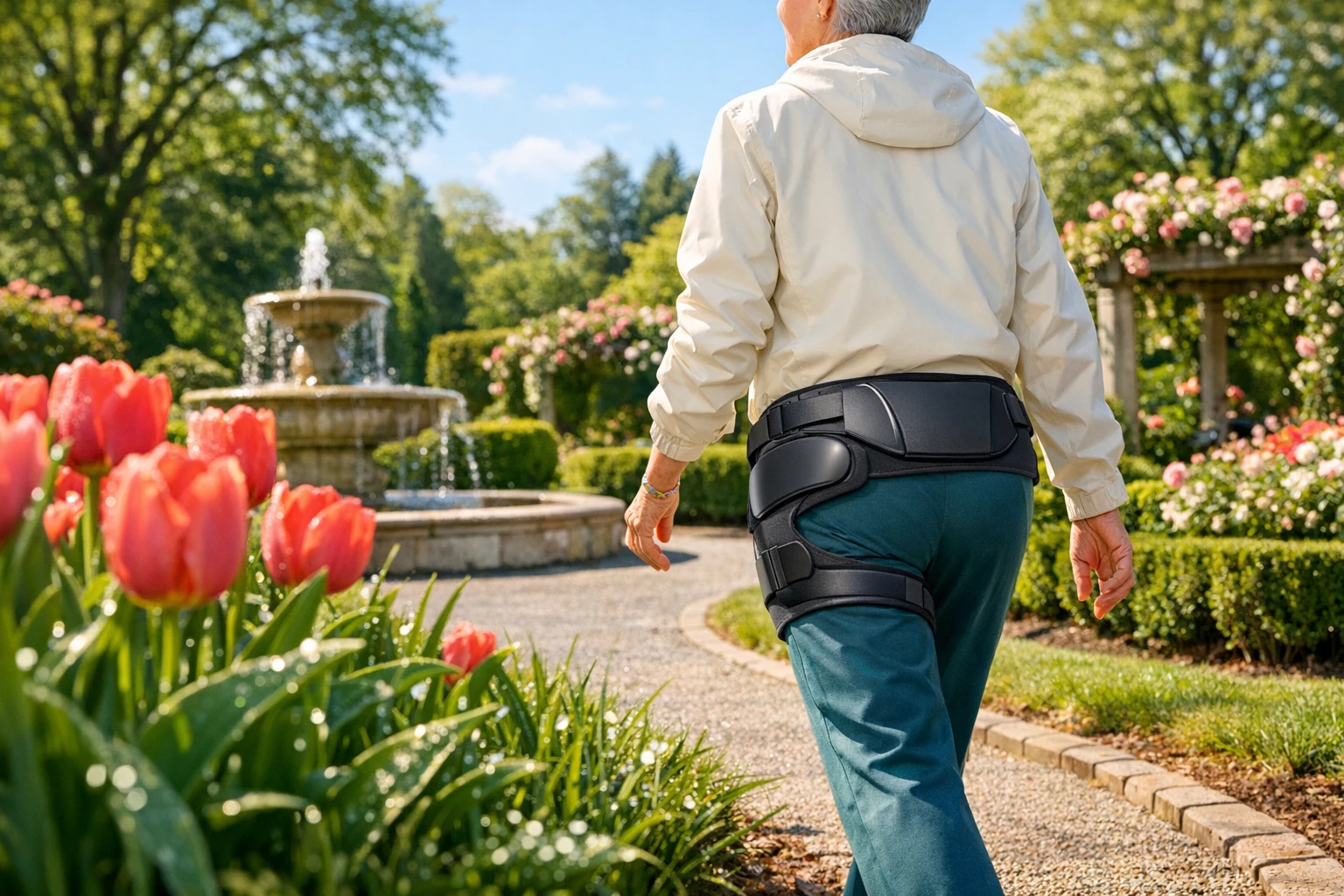
The phrase new support device can mean different things, but one of the most promising developments is the wearable gait-assist device. Unlike a cane or walker, which provides external support through the hands and arms, a gait-assist device is worn on the body, often around the hips, thighs, knee, ankle, or lower leg. Some models are passive, using springs, hinges, or elastic materials to store and release energy during a step. Others are powered, using small motors and sensors to detect movement and provide subtle assistance at the right moment in the walking cycle.
Imagine the body as an orchestra that has lost timing in one section. The goal of a gait-assist device is not to play the whole symphony for you. It is to help the lagging instruments come back into rhythm. Sensors may detect when the foot leaves the ground, how fast the leg is moving, or whether the user is leaning too far to one side. Then the device responds by supporting knee extension, lifting the foot slightly, guiding a smoother stride, or helping the hips move more efficiently. In simpler terms, it can reduce the effort needed for each step and make movement more predictable.
There are a few broad categories within this emerging field. • Ankle-foot support devices may help with foot clearance, especially in people with foot drop. • Knee or hip assist systems may help users who struggle with weakness, arthritis, or post-injury instability. • Soft exosuits, made from fabric and cable systems, aim to give assistance without the bulk of a rigid frame. • More advanced robotic systems are being used in rehabilitation clinics, where therapists can adjust settings and monitor progress closely.
Early research on wearable mobility aids is encouraging, though it is important not to oversell the evidence. Small studies and clinical trials have reported improvements in selected groups in measures such as walking speed, stride length, fatigue, or perceived effort. However, results vary depending on the condition being treated, the design of the device, and how well the user has been trained. A smart device is not a magic shortcut. It works best when paired with proper assessment, fitting, and sometimes physical therapy. Still, for a person who feels caught between “I do not need a wheelchair” and “a cane is no longer enough,” this newer category can offer a genuinely interesting middle path.
How It Compares With Canes, Walkers, Rollators, and Braces
To understand why a newer support device may help, it is useful to compare it with the tools people already know. Each mobility aid solves a slightly different problem, and no single option is automatically best. A cane can improve balance and reduce load on one side of the body, but it requires hand use and enough coordination to place it correctly. A walker offers more stability, yet it can be bulky, slower on stairs, awkward in tight spaces, and tiring for people with arm or shoulder problems. A rollator adds wheels and a seat, which many users love, but it works best on reasonably smooth ground and still depends on grip, steering, and braking control.
Traditional braces, such as ankle-foot orthoses, remain very valuable. They can stabilize a weak joint, improve foot clearance, and reduce tripping risk. In some cases, a properly fitted brace is the simplest and most effective answer. But braces are usually designed to support a specific joint or movement pattern. A newer gait-assist device may do more than hold a position; it may respond dynamically during walking. That is a meaningful distinction. Instead of being a static support, it may help shape the timing and mechanics of the step itself.
At the other end of the spectrum are full robotic exoskeletons, which have captured plenty of public attention. These systems can be remarkable in rehab environments, particularly for intensive training after neurological injury. Yet they are often expensive, highly specialized, and not always practical for ordinary day-to-day use at home or in the community. The newer support devices now attracting attention tend to sit between simple aids and large robotic systems. They aim for a lighter, more wearable, more realistic form of assistance.
Here is a practical way to compare them: • cane: portable and affordable, but limited support; • walker: high stability, but less natural movement and more arm dependence; • rollator: good for endurance and rest breaks, but less useful on uneven terrain; • brace: targeted joint control, often effective, but not always adaptive; • wearable gait-assist device: potentially more natural movement support with less hand reliance, though usually at a higher cost and with more fitting needs.
The main advantage of a body-worn support device is that it may allow a more normal arm swing and a more natural walking pattern. The main disadvantage is complexity. It may require setup, charging, adjustment, training, and patience. For some users, that trade-off will feel liberating. For others, a straightforward cane or rollator will remain the smarter choice. The right question is not which device sounds more advanced. The right question is which one solves the actual mobility problem in front of you.
Who May Benefit Most and How to Use It Safely
A new walking support device may be especially helpful for people whose main problem is not total inability to walk, but inefficient or unsafe walking. That includes older adults with declining balance, people recovering from orthopedic surgery, some individuals in stroke rehabilitation, those with mild to moderate neurological weakness, and people whose arthritis makes each step feel heavy and unstable. It may also help users who fatigue quickly and need support to conserve energy over longer distances. The common thread is that they can still walk, but they no longer trust the quality of that walk.
That said, suitability depends on details. A person with severe dizziness, major cognitive impairment, advanced neuropathy, or significant uncorrected vision loss may need a different strategy. Someone who cannot stand safely without substantial assistance may require more support than a wearable device can provide. This is where professional assessment matters. A physical therapist, rehabilitation physician, orthotist, or mobility specialist can look at gait pattern, muscle strength, joint range, fall history, and home environment before recommending a device. A good fitting session should not feel like a sales pitch. It should feel like a careful investigation.
Safe use usually involves a short learning period. Even a well-designed device changes body mechanics, and the brain needs time to adapt. Most users benefit from supervised practice at first, especially when turning, stepping over thresholds, walking on carpet, or navigating curbs. Some devices are tuned to the individual, which means settings may need adjustment after several sessions. In real life, the body does not move like it does in a brochure. It hesitates, compensates, tires, and surprises.
Before using one regularly, it helps to ask practical questions: • Can you put it on without strain? • Is it comfortable for at least twenty to thirty minutes? • Does it fit with your usual shoes and clothing? • Can you sit down and stand up safely while wearing it? • Will you use it indoors, outdoors, or both? • What happens if the battery runs low or a strap loosens? These details often determine success more than the headline technology.
It is also worth remembering that support devices work best as part of a wider plan. Strengthening exercises, balance training, medication review, footwear checks, and home safety changes can all improve results. The device may be the visible piece, but the larger goal is safer, easier movement. If the tool helps someone get back to morning walks, grocery shopping, or visiting friends without that constant internal alarm bell, then it is doing something deeply practical and deeply human.
What to Consider Before You Buy: Cost, Limits, and a Practical Conclusion
Excitement around new mobility technology is understandable, but real-world decisions usually come down to three things: usefulness, affordability, and fit with daily life. Cost varies widely. A simple brace may be relatively accessible, while sensor-based or powered walking aids can become much more expensive. Insurance coverage is inconsistent and depends on country, provider, diagnosis, and whether the device is classified as durable medical equipment, orthotic support, or rehabilitation technology. In some cases, people can access these devices through clinics, trials, or therapy programs before deciding whether to purchase one. That trial period can be extremely valuable.
There are also practical limitations that deserve honest attention. A powered device may need charging and maintenance. A wearable system may feel warm, noticeable, or awkward under certain clothes. A device that works beautifully on flat clinic floors may behave differently on gravel, wet sidewalks, or narrow stairs. Some people dislike the setup time. Others stop using a helpful tool simply because it is inconvenient during bathroom breaks, driving, or quick errands. This is not failure; it is reality. The best aid is the one that actually fits the rhythm of a person’s life.
Questions worth asking before making a decision include: • What exact walking problem is this supposed to solve? • Is there evidence for my condition, not just for mobility in general? • Can I try it before committing? • Who will adjust it if my needs change? • Are there maintenance costs, replacement parts, or software updates? • If it does not work well outdoors or on stairs, do I need a second option as well? These questions can save money, frustration, and misplaced hope.
There is another point worth holding onto: progress does not always look dramatic. Sometimes success is not a suddenly perfect gait. Sometimes it is being able to cross a parking lot with less fear, stand long enough to cook dinner, or walk through a store without feeling as if every step is a negotiation. Those gains can be modest on paper and enormous in everyday life.
Conclusion: Choosing Help That Fits Your Walk
If you are struggling to walk, a newer support device may be worth exploring, especially if a cane feels too limited and a larger mobility aid feels like too much. The strongest options are the ones matched to your actual needs, tested in realistic conditions, and introduced with professional guidance when possible. Look for a device that improves safety and confidence without making everyday life harder to manage. In the end, the goal is not to own impressive technology; it is to move through the world with more steadiness, less strain, and a little more freedom than you had yesterday.