The Best Cruises from Southampton: All You Need to Know for 2026.
Why Cruises from Southampton Remain So Popular in 2026
Cruises from Southampton matter because they turn a complicated holiday into something refreshingly direct: no flight connections, no baggage-claim shuffle, and a huge range of routes from one well-connected port. For UK travellers, that ease can cut stress, reduce extra travel costs, and make longer sailings feel far more achievable. For overseas visitors, Southampton also works as a practical gateway to Britain, Northern Europe, the Atlantic islands, and beyond.
Before diving into the details, it helps to map the journey ahead. This article is structured to answer the main questions most travellers ask when they begin planning a Southampton cruise for 2026.
- Why Southampton is such an important cruise hub
- Which itineraries are most appealing from this port
- How major cruise lines and ship styles compare
- What to know about budgeting, timing, and booking
- Who benefits most from sailing from Southampton
Southampton has long been associated with ocean travel, and that heritage still matters. Today it is one of Europe’s leading turnaround cruise ports, meaning many sailings begin and end there rather than simply calling in for a day. That difference is crucial for passengers because it improves practical convenience. You can usually find direct rail links from London, motorway access for drivers, and a choice of nearby hotels for pre-cruise stays. The port also has multiple cruise terminals, which helps it handle a large volume of departures across the main season.
What makes Southampton particularly relevant in 2026 is not only scale but flexibility. Travellers can board ships for a two-night sampler, a family summer holiday, a classic fjords cruise, a winter Canary Islands escape, or even part of a world voyage. Few ports in the UK offer such variety. For people who dislike airports, have mobility concerns, or simply want a softer start to their holiday, this can be the deciding factor. There is a certain pleasure in stepping aboard with a suitcase and a coffee instead of racing through a terminal under fluorescent lights.
Southampton also appeals because it fits different travel personalities. Some passengers want British familiarity, with UK-friendly onboard culture and no need to fly. Others want international variety, using the port as a practical launch point for Europe and beyond. In both cases, the city’s role is less glamorous than the destinations themselves, but no less important. A well-chosen departure port can save money, reduce fatigue, and lower the risk of travel disruption before the cruise even begins.
In short, Southampton is not just a place where cruises happen to leave. It is a strategic advantage for many travellers, and understanding that advantage is the first step toward choosing the right 2026 sailing.
Where You Can Go: The Main Types of Cruises from Southampton in 2026
One of the strongest arguments for sailing from Southampton is the range of itineraries available. Instead of a single cruise style dominating the port, passengers can choose between cool-climate scenery, warm-weather escapes, city-heavy routes, and sea-day-rich voyages. That variety matters because the best cruise is rarely about the ship alone. It is about matching the route to your expectations, your stamina, and the kind of days you actually enjoy.
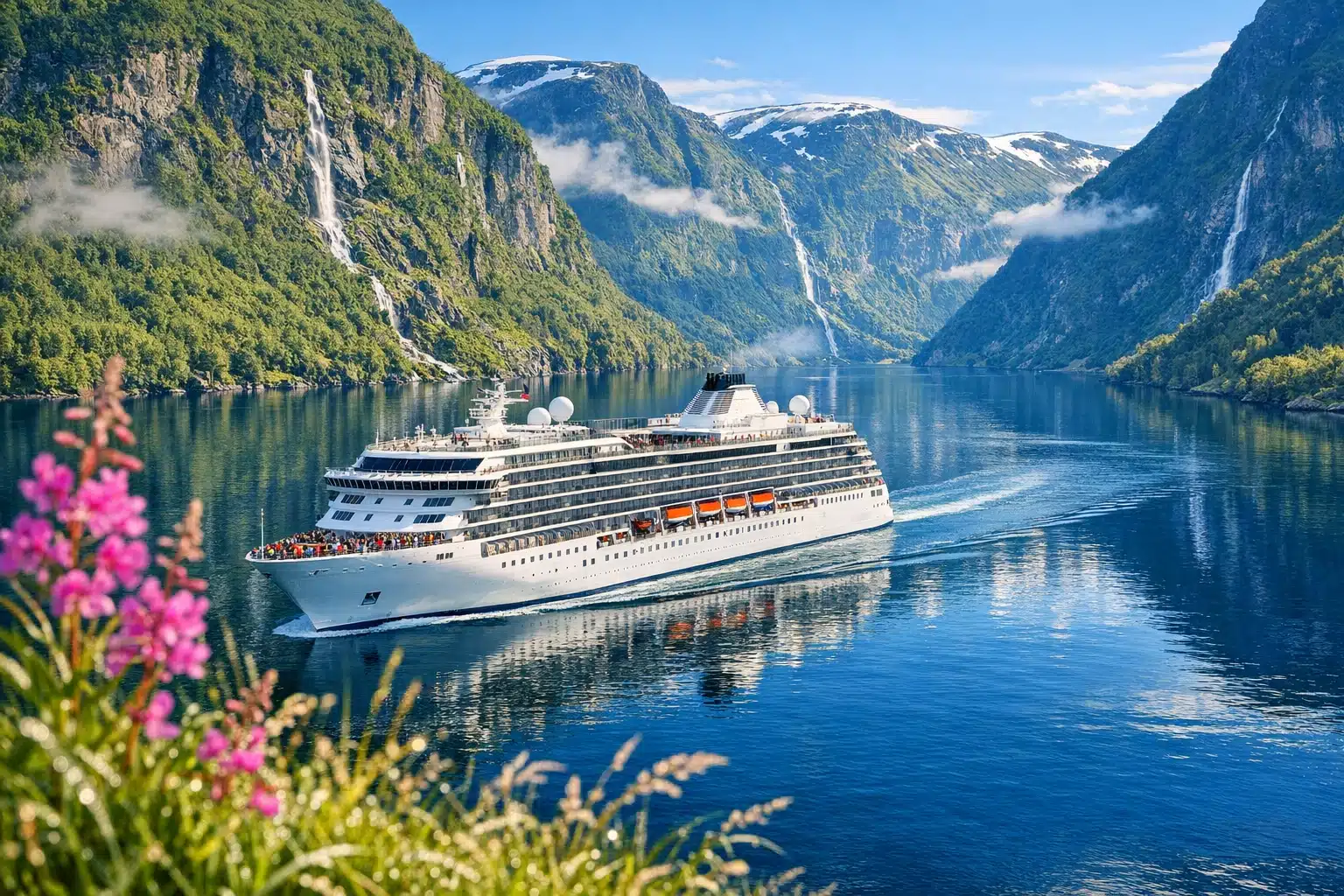
For many travellers, the classic Southampton itinerary is the Norwegian fjords cruise. These sailings are popular because they combine dramatic landscapes with relatively straightforward travel from the UK. They often suit first-time cruisers, photographers, and passengers who prefer scenery over nonstop urban sightseeing. A fjords voyage typically offers a good balance of calm visual grandeur and manageable port days. Looking out from a deck as cliffs, waterfalls, and low cloud gather around the ship can feel almost theatrical, as if the horizon has decided to perform.
Mediterranean cruises from Southampton appeal to a different kind of traveller. They often include extra sea days because ships must sail down through the Bay of Biscay and along the Iberian coast before reaching classic Mediterranean ports. That makes them especially suitable for passengers who enjoy life onboard and do not mind a longer journey. The reward is variety: Spanish ports, Italian cities, French Riviera calls, and sometimes Greek islands on extended itineraries. The trade-off is time. If you want the Mediterranean without flights, Southampton can deliver it, but usually not quickly.
Other frequently seen options include:
- British Isles cruises, ideal for relaxed sightseeing and shorter travel commitments
- Canary Islands sailings, often chosen for winter sun and a slower rhythm
- Northern Europe and Baltic itineraries, which can include capitals, old Hanseatic ports, and culturally rich shore days
- Transatlantic and repositioning cruises, better for experienced passengers who enjoy many sea days
- World cruise sectors, which let travellers sample longer grand-voyage travel without booking the full journey
Mini-cruises also deserve attention. These short sailings, often lasting two to five nights, can be excellent for testing whether cruising suits you. They are also popular for birthdays, celebrations, or simply a change of scene without a long holiday commitment.
In 2026, the smartest way to compare Southampton itineraries is to think in terms of rhythm rather than prestige. Ask yourself whether you want scenic sailing, destination intensity, warmth, cultural depth, or maximum time at sea. Once you answer that honestly, the right route becomes far easier to spot.
Choosing the Right Cruise Line and Ship Style from Southampton
Not all cruises from Southampton feel the same, even when they visit similar ports. The cruise line, ship size, onboard atmosphere, and fare structure can alter the experience more than many first-time passengers expect. This is why two seven-night sailings with overlapping destinations may appeal to entirely different travellers. One may feel like a lively floating resort with late-night entertainment and family programming, while another may focus on quieter lounges, destination talks, and a more traditional style of service.
Southampton is served by a mix of British favourites and international brands. Exact 2026 deployments vary by season and release date, but the port has regularly hosted ships from lines such as P&O Cruises, Cunard, MSC Cruises, Princess Cruises, Celebrity Cruises, Royal Caribbean, and others. Each tends to attract a somewhat different audience, even when onboard offerings overlap.
A useful starting point is to divide the market into broad styles:
- Mainstream family-friendly lines: usually strong on entertainment, varied dining, kids’ clubs, and promotional fares
- Premium lines: often calmer in tone, with more space per guest, more refined dining, and enrichment-led programming
- Classic or traditional lines: ideal for travellers who value formality, afternoon tea, ballroom culture, or ocean-liner heritage
- Luxury and ultra-premium options: fewer passengers, more inclusions, and generally higher upfront fares
Ship size matters too. Larger ships often deliver the widest range of facilities: multiple restaurants, theatres, water features, family zones, and dense activity schedules. They can be excellent for multigenerational groups because different passengers can spend the same day in completely different ways. Smaller ships or mid-sized vessels tend to feel easier to navigate and sometimes more destination-focused. For some travellers, that calmer flow is worth more than a long list of onboard attractions.
Another key point is what the fare includes. Some lines bundle more than others. Drinks, gratuities, Wi-Fi, specialty dining, and shuttle services may be included, partly included, or extra. A cruise that looks cheaper at first glance may end up costing more once you add the features you actually want. That is why value and price are not interchangeable.
Culture onboard also deserves attention. Southampton sailings often attract many British passengers, especially on lines with a strong UK market, which can shape menus, entertainment, humour, and even daily routines. Some travellers love that familiarity; others prefer a more international mix. Neither is inherently better, but the difference affects how the holiday feels.
The best approach is simple: compare ships by mood, inclusions, and passenger profile, not just deck plans. A smart match on those points often leads to a much better cruise than chasing the newest vessel or the lowest lead-in fare.
Costs, Booking Strategy, and Practical Planning for a Southampton Cruise
Planning a cruise from Southampton is not only about choosing a ship. It is also about understanding how the total holiday cost is built. Cruise fares can look straightforward, but the real spend often depends on timing, cabin selection, extras, and how efficiently you handle the departure itself. If you go in with a clear checklist, Southampton can be a cost-effective option. If you book impulsively, the final bill may feel less elegant than the brochure.
For 2026 bookings, timing is important. Early-booking fares can be attractive when new itineraries are released, especially if you want specific cabin categories, school-holiday dates, or popular fjords and Mediterranean sailings. On the other hand, late deals sometimes appear when lines still need to fill inventory, though those offers usually involve compromises on cabin location or sailing choice. There is no universal rule, but there is a practical one: book early for choice, wait only if you are genuinely flexible.
When comparing costs, look beyond the base fare. Common extras include:
- Gratuities or service charges
- Drinks packages or pay-as-you-go beverages
- Wi-Fi access
- Specialty restaurants
- Shore excursions
- Parking at Southampton or rail travel to the port
- Pre-cruise hotel stays
- Travel insurance, which is strongly advisable for cruise holidays
Cabin selection also shapes value. Inside cabins usually offer the lowest entry price and may work well for port-intensive trips when you spend little time in the room. Balcony cabins can be especially rewarding on scenic routes such as the fjords or on voyages with several sea days. Suites add space and perks, but they are not automatically the best use of money unless you genuinely value the extra room or service tier.
Practical planning starts well before embarkation day. Check passport validity, any visa needs tied to your itinerary, luggage rules, boarding times, and parking or train arrangements. If you live far from Southampton, arriving the day before is often wise. A missed cruise because of motorway traffic or rail disruption is an expensive lesson.
It also helps to think seasonally. Summer sailings bring school-holiday demand and often higher fares. Shoulder seasons may offer better pricing and a calmer onboard atmosphere. Winter Canary Islands cruises can be appealing if you want mild weather without long-haul travel.
The key lesson is that a well-priced Southampton cruise is not just found; it is assembled. The travellers who do best are usually those who compare inclusions carefully, stay realistic about extras, and match their spending to how they actually holiday.
Final Thoughts for 2026 Travellers: Who Should Choose a Cruise from Southampton?
For many people, Southampton is not merely a convenient departure port. It is the reason a cruise becomes realistic in the first place. If you live in the UK and want to avoid airport queues, luggage limits, early check-ins, and the possibility of flight disruption affecting your holiday, Southampton offers a calmer starting point. That can be especially valuable for older travellers, families with children, anxious flyers, and anyone who prefers the holiday to begin at the terminal rather than several stressful steps before it.
It is also an excellent choice for first-time cruisers. Boarding close to home removes one layer of uncertainty, which lets you focus on learning the rhythm of cruise life itself: muster drills, port days, dining times, and the small art of knowing when to claim a good spot on deck. A short sailing from Southampton can function like a trial run, while longer itineraries let confident travellers expand into the Mediterranean, the Atlantic islands, or transatlantic crossings.
That said, Southampton is not automatically ideal for everyone. If your main goal is to maximise warm-weather port time in the Mediterranean, flying to a southern embarkation port may still be more efficient. If you dislike sea days, some Southampton departures may feel too transit-heavy. British weather at the start and end of the cruise can also be variable, which matters if your dream holiday begins with instant sunshine on the open deck.
A simple decision framework can help:
- Choose Southampton if convenience, no-fly travel, and a smoother start matter most
- Choose it if you enjoy sea days and view the ship as part of the destination
- Choose it for fjords, British Isles, mini-cruises, and many classic Northern Europe routes
- Compare carefully before booking a Mediterranean itinerary if speed is your priority
- Book with added attention to extras, cabin type, and travel-to-port logistics
For overseas visitors, Southampton can also work beautifully when paired with a few days in London or southern England. The city becomes a practical hinge between land travel and sea travel, not just a point on a map. And that, in many ways, is its real strength: it makes the holiday feel joined up.
For the target audience planning 2026 sailings, the best cruise from Southampton is the one that aligns convenience, itinerary, and onboard style in equal measure. Get those three elements right, and Southampton can offer one of the most straightforward and rewarding cruise departures available to British and international travellers alike.