Top-Rated Accessible Cruises for 2025: A Complete Guide for Irish Travelers
Accessible cruising matters because a holiday at sea can remove many of the practical hurdles that make multi-stop travel tiring, especially when mobility, sensory, or medical needs are part of the plan. For Irish travelers, one booking can bring together accommodation, dining, transport, and entertainment in a controlled environment. Yet convenience only becomes genuine freedom when cabins, public spaces, staff support, and shore arrangements are designed with real accessibility in mind.
Outline: this guide explains what accessibility really means on a cruise, compares leading cruise styles for Irish travelers, covers booking and travel planning from Ireland, looks at daily life onboard and in port, and closes with practical advice for choosing a trip that matches real needs rather than marketing language.
What an Accessible Cruise Really Means in 2025
An accessible cruise is not simply a ship with lifts and a few adapted cabins. In practice, it is a chain of decisions and physical spaces that either work together smoothly or leave the traveler doing all the extra work. Accessibility begins long before the gangway appears. It starts with the booking process, the clarity of deck plans, the honesty of the cruise line’s policies, the airport and transfer arrangements, and the way staff answer specific questions. A cruise can look polished in a brochure and still prove awkward in real life if the bathroom threshold is high, the excursion bus lacks a lift, or a tender port makes disembarkation impossible for wheelchair users.
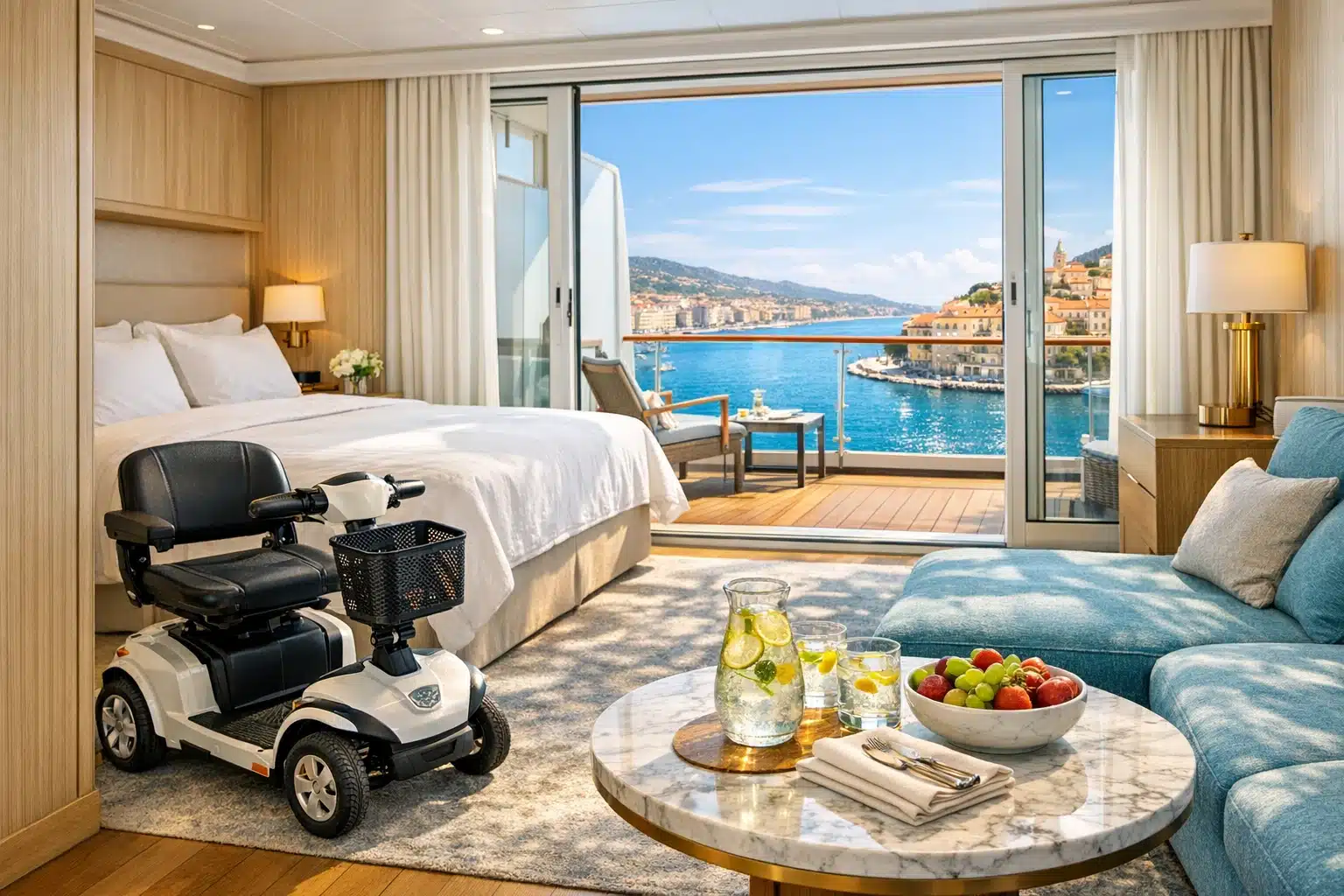
In 2025, the conversation is wider than mobility alone. Many travelers also need support around hearing, vision, neurodivergence, dietary restrictions, fatigue management, refrigeration for medication, or room for medical equipment. A well-designed ship makes those needs feel routine rather than exceptional. On newer vessels, accessible cabins may include wider doorways, turning space, grab rails, roll-in or low-step showers, lowered wardrobes, and emergency contact features. However, the details vary significantly by ship and cabin category. Two cabins sold under the same “accessible” label may still differ in layout, bathroom design, balcony threshold height, and proximity to lifts.
One of the most useful ways to evaluate a cruise is to think in layers. Ask how the experience works at each stage: booking, boarding, sleeping, dining, entertainment, safety, and going ashore. If one layer fails, the whole holiday feels less restful. Key points to check include: • accessible cabin dimensions • shower type and bathroom layout • number and location of lifts • wheelchair seating in theatres • pool or hot tub access • refrigerator availability for medication • assistance during embarkation and disembarkation • policies for mobility scooters and battery charging.
Large ships often handle these basics better because they were built with more space and more standardized systems. Still, scale is not everything. A smaller ship with thoughtful service can outperform a giant vessel that looks impressive but feels like a maze. The clearest sign of quality is not a glossy promise. It is precise information. If a cruise line or agent can answer detailed questions without hesitation, that is usually a very good sign. If the response stays vague, treat it as a warning rather than a mystery waiting to solve itself once you board.
Comparing Cruise Styles and Top-Rated Options for Irish Travelers
There is no single “best” accessible cruise for every Irish traveler, because the right choice depends on mobility level, budget, preferred pace, and tolerance for crowds. Still, some cruise styles are more consistently workable than others. Large contemporary ocean ships, often carrying between 2,000 and 6,000 passengers, usually provide the broadest range of accessible cabins, lifts, entertainment venues, and onboard services. Cruise lines such as Royal Caribbean, Celebrity Cruises, Norwegian Cruise Line, MSC Cruises, Princess Cruises, and Cunard are frequently considered by travelers looking for modern facilities and varied itineraries. Their newer ships tend to offer better cabin design, smoother circulation through public areas, and more choice in dining and entertainment.
Premium and luxury lines can appeal to travelers who value calmer spaces, higher staff-to-guest ratios, and less crowded public rooms. That can make daily movement easier, especially for guests who tire quickly or prefer a quieter sensory environment. However, not every upscale ship is automatically more accessible. Some smaller luxury vessels have tighter corridors, fewer lifts, and limited adapted cabin stock. Price buys comfort, but it does not always guarantee practicality. That is why deck plans matter more than brand reputation alone.
River cruises deserve careful thought. They can be beautiful, intimate, and culturally rich, but they are often the most physically demanding option. Many river ships carry well under 200 guests and may have narrow passageways, steep gangways, or frequent situations where ships dock side by side, meaning passengers walk through another vessel to reach shore. For a traveler using a wheelchair or scooter, that can turn a romantic itinerary into a logistical puzzle. Small expedition ships can present similar challenges, especially on routes involving zodiacs, uneven landings, or remote infrastructure.
For Irish travelers in particular, itinerary style matters as much as ship style. British Isles sailings, Northern Europe routes, and departures from Southampton are often easier to manage than fly-cruise combinations with multiple transfers. Mediterranean cruises offer sunshine and famous ports, but older city centres can bring cobbles, steep gradients, and longer distances from berth to transport. A practical comparison looks like this: • large ocean ships usually offer the strongest physical accessibility • premium lines can provide calmer service and more personal attention • river and expedition cruises may suit more independent travelers with lighter mobility needs. The best-rated option, in real terms, is the one whose ship design and itinerary support your day-to-day comfort rather than just your wish list.
Booking from Ireland: Flights, Transfers, Insurance, and the Questions That Matter
For Irish travelers, accessible cruise planning begins with geography. The ship may be the centrepiece of the holiday, but the first challenge is often getting to the embarkation port without stress. Cruises from Southampton can be attractive because they reduce the complexity of a long-haul trip, even if they still require a flight to Britain, a ferry connection, or a carefully arranged ground transfer. Mediterranean departures from Barcelona, Rome, Lisbon, or Athens can offer excellent itineraries, but they usually add airport navigation, baggage handling, and hotel logistics before the cruise has even started. When mobility or fatigue is a factor, one extra transfer can feel like three.
A useful rule is to book the journey in layers and leave margin between them. Arriving at the departure city the day before embarkation is often worth the extra hotel cost, especially when traveling with specialist equipment or medication. Weather delays, missed connections, and airport assistance bottlenecks are frustrating for any passenger; they are far more disruptive when accessible transport has been pre-booked to a narrow timetable. A calm overnight stop can transform the first day from a sprint into a proper start to the holiday.
Before paying a deposit, ask direct questions and request answers in writing. Good ones include: • What exactly are the cabin door and bathroom measurements? • Is the shower fully roll-in or does it have a lip? • Can a mobility scooter be stored and charged safely in the room? • Which ports are tender ports, and what are the restrictions there? • Are accessible airport and port transfers available through the cruise line or do I need a private provider? • What paperwork is required for oxygen, CPAP machines, refrigeration, or sharps disposal? • Does the travel insurance policy cover pre-existing conditions and mobility equipment at replacement value?
Insurance deserves more attention than it usually gets. Standard policies may not fully cover wheelchairs, scooters, medical devices, or the cost of missed embarkation caused by disrupted assistance. It is also worth checking what happens if an accessible excursion is cancelled and whether cabin reassignment is protected. Another practical point is timing. Accessible cabins are only a small share of total inventory on most ships, often selling out far earlier than standard rooms. Booking early is not just a way to get a better price. For many travelers, it is the only realistic way to secure the right cabin type, the right transfer, and a route that does not begin with unnecessary strain.
Life Onboard and Ashore: Daily Comfort, Shore Excursions, and Hidden Friction Points
Once the ship is moving, the quality of accessibility shows up in ordinary moments. Can you reach breakfast without weaving through tight corners? Is there enough space around the bed to turn comfortably? Are theatre seating areas integrated into the room rather than tucked away like an afterthought? Does the buffet require balancing plates in a way that becomes tiring or risky? A ship can look elegant in photographs and still create small obstacles every hour. Those obstacles add up. The most successful accessible cruises feel quietly easy. You are not constantly negotiating space, explaining needs, or planning around avoidable barriers.
Dining is a good example. Some travelers prefer fixed table service because staff quickly learn what assistance is useful, whether that means carrying plates, pacing courses, or handling allergens carefully. Others like flexible dining but benefit from going at quieter times, when lifts and restaurant entrances are less crowded. Entertainment also varies more than many first-time cruisers expect. Large ships usually provide reserved wheelchair spaces, hearing support in some venues, and multiple activity choices if one room feels overwhelming. Smaller ships may offer a more peaceful atmosphere, yet fewer alternatives if a space proves difficult to access.
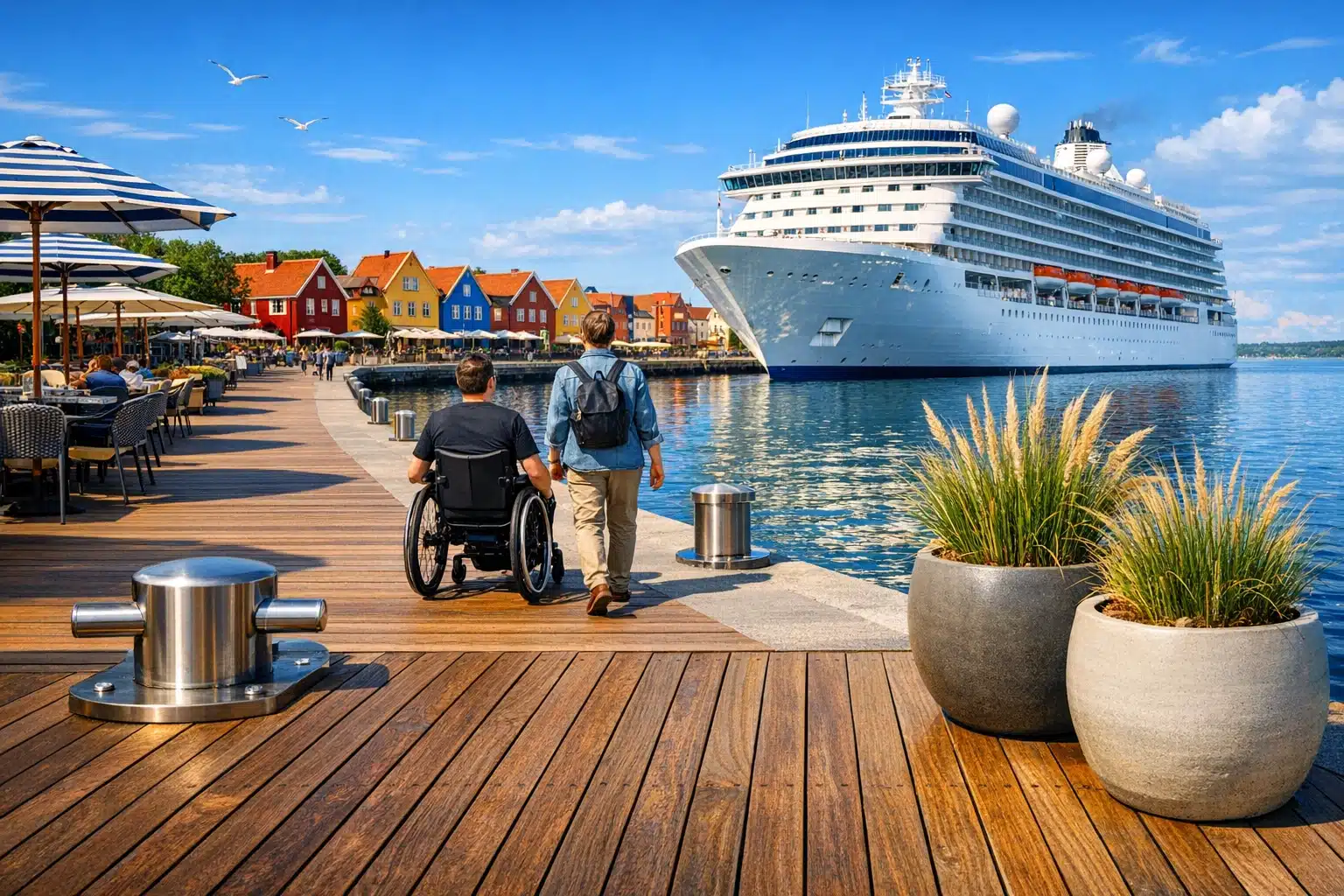
Shore excursions are where expectations need the most realism. Ports are not controlled environments in the same way that ships are. One stop may have smooth quays and accessible coaches, while the next includes steep ramps, shuttle queues, or a tender operation that prevents wheelchair users from disembarking safely. Weather can change everything. So can local infrastructure. Official cruise line excursions are often the safest starting point because the line knows the ship schedule and can flag accessible options more clearly, but independent tours may provide better customization if you choose a specialist operator in advance.
When reviewing shore plans, ask for specifics rather than labels. “Moderate walking” can mean very different things in Dubrovnik, Naples, or a Norwegian fjord village. Practical checks include: • distance from berth to coach • surface type • toilet availability • presence of steps • vehicle lift or ramp details • whether companions can stay together • what happens if conditions change on the day. A ship at sea can feel like a floating hotel that finally decided to cooperate with your schedule. The port days are where that spell gets tested, so clear planning is what keeps the magic from dissolving on the dock.
Final Guidance for Irish Travelers Choosing an Accessible Cruise in 2025
If you are booking from Ireland, the smartest way to choose an accessible cruise is to begin with your actual daily needs, not the destination poster. Start with the non-negotiables: transfer simplicity, cabin layout, bathroom design, medical support, and whether you want a ship that feels busy and energetic or calmer and more measured. Only after that should you compare itineraries, dining packages, and extras. A beautiful route is not a good bargain if getting on and off the ship becomes exhausting by day three.
For many travelers, the strongest all-round choice will be a newer mainstream ocean ship on an itinerary with manageable travel connections and relatively straightforward port infrastructure. That usually means more adapted cabins, more lifts, and better odds of finding entertainment, dining, and public spaces that work without special arrangements. Travelers who value quieter surroundings and more personal service may prefer premium lines, but they should still examine deck plans closely rather than assuming a higher fare solves every access issue. River and expedition cruises can be rewarding, yet they tend to suit people with lighter mobility needs or a high tolerance for unpredictability.
Budget also needs honest framing. The cheapest fare can become expensive once private transfers, specialist hotels, insurance upgrades, and replacement equipment coverage are added. Sometimes paying more for a better-located cabin, a pre-cruise hotel, or a port-intensive route with fewer tender calls is the wiser financial decision because it reduces the risk of costly disruption later. In other words, value and price are not the same thing.
For Irish readers planning 2025 travel, the clearest takeaway is this: accessible cruising can be genuinely liberating when the details are handled properly. Build your shortlist around ships that answer precise questions, routes that respect your energy, and support systems that are visible before you board. A good cruise should let the sea feel open, not uncertain. When the planning is done well, the ship stops being an obstacle to manage and becomes what it should have been all along: a comfortable way to see more of the world with less strain.