Princess Cruises Deals 2026: How to Find Value and Compare Itineraries
Planning a 2026 Princess Cruises trip can be exciting and a little confusing, because the lowest advertised fare is not always the smartest buy. Cabin category, route, port fees, bundled extras, and sailing date can shift the real cost more than many travelers expect. This guide explains how to compare value with a calm, practical approach. If you want a cruise that fits your budget and your travel style, the sections below will help.
The outline of this article is straightforward: first, define what good value actually means on a cruise; second, compare itinerary types by destination and pacing; third, look at timing and booking tactics; fourth, examine cabins, packages, and onboard spending; fifth, use a practical checklist to narrow your choices and book with more confidence.
1. How to Judge Value Beyond the Cheapest Fare
When travelers search for Princess Cruises deals for 2026, the first number they notice is usually the base fare. That is understandable, but it can be misleading if it becomes the only figure in the decision. Cruise pricing is layered. The advertised rate is often just the starting point, while the actual trip cost may also include taxes and fees, gratuities, drinks, Wi-Fi, specialty dining, shore excursions, hotel nights before embarkation, flights, and transfers. A bargain that looks dazzling on page one can fade quickly when the full picture appears.
A better way to compare sailings is to think in terms of total trip value rather than sticker price alone. For example, a seven-night itinerary with a slightly higher fare may still be the better buy if it leaves from a more convenient port, reduces airfare, includes more appealing stops, or offers more sea days for travelers who enjoy the ship itself. On the other hand, a lower-priced cruise with a complex flight schedule, expensive pre-cruise hotel needs, and a port-heavy schedule that requires frequent excursion spending may end up costing more than expected.
Another useful lens is cost per usable vacation day. Imagine two cruises that are close in overall price: one has many tender ports, short stops, and awkward arrival times, while the other offers longer stays and easier embarkation. The second option may provide a smoother holiday, even if the fare is not the lowest in the search results. Value also depends on personal habits. A traveler who rarely drinks alcohol and only checks email occasionally may not benefit much from a package that bundles beverages and premium internet. Someone else may save meaningfully through the same bundle.
- Compare the full trip cost, not just the cruise fare.
- Measure the price against the number of nights and the quality of port time.
- Factor in airfare, hotel stays, transfers, and likely onboard spending.
- Ask whether included extras match how you actually travel.
Think of a cruise deal the way you might think about booking an apartment for a short stay: the nightly rate matters, but so do location, hidden fees, convenience, and what is already included. Once you move past the headline price, the comparison becomes far more useful. That is the point where a decent offer can be separated from a genuinely smart one.
2. How to Compare Princess Itineraries by Destination, Length, and Pace
One of the biggest differences between cruise deals is not the cabin or the promotion, but the itinerary itself. Princess Cruises is known for a broad range of routes, and the right sailing for one traveler may feel entirely wrong for another. Comparing itineraries well means looking at destination, trip length, embarkation city, number of sea days, port timing, and the rhythm of the voyage. A cruise is not only a floating hotel; it is a schedule, and that schedule shapes your whole experience.
Take Alaska as an example. Some 2026 sailings may emphasize scenic cruising and glacier viewing, while others lean more heavily into port calls. A roundtrip voyage from Seattle can be convenient for many North American travelers because flights are often easier to arrange, yet a one-way sailing involving Vancouver and interior travel may create a richer land-and-sea combination for people who want a broader regional trip. The cheaper option is not always the stronger one if your goal is to see more landscapes rather than simply spend a week at sea.
The Caribbean presents a different type of comparison. Here, many sailings can appear similar at first glance, but the details matter. Eastern, Western, and Southern Caribbean routes each create a distinct feel. An itinerary with more sea days may suit travelers who want relaxed mornings, time by the pool, and a slower cadence. A port-intensive plan can be ideal for guests who see the ship mainly as a comfortable base between excursions. Even the order of ports matters, because early or late arrival times affect how much of each destination you can genuinely enjoy.
Longer voyages often deserve special attention. A ten- to fourteen-night cruise may deliver a lower per-night rate than a shorter sailing, but it also requires more vacation days and can change the travel budget in practical ways. Repositioning or canal itineraries, for instance, may be appealing for seasoned cruisers who love sea days and unusual routing. First-time cruisers sometimes prefer a classic seven-night pattern because it offers variety without feeling too long or too logistically demanding.
- Check whether the cruise is roundtrip or one-way.
- Count sea days and compare them with full port days.
- Review arrival and departure times, not just the port names.
- Consider flight convenience and hotel needs at the embarkation city.
There is a quiet but important difference between seeing many places and enjoying them well. The best itinerary is rarely the one with the longest list of names. It is the one whose pace, geography, and daily flow match what you want your vacation to feel like.
3. When to Book and Which Deal Strategies Usually Work Best
Finding a good 2026 cruise offer is partly about destination choice and partly about timing. Cruise prices move for many reasons: demand, seasonality, school calendars, holiday travel, cabin inventory, and promotional campaigns. There is no single magic week that guarantees the lowest price, but there are reliable patterns that can help travelers make better decisions.
Early booking often works well for people who want a specific cabin category, a particular sailing date, or a high-demand season. Families traveling during school breaks, couples targeting peak summer sailings, and travelers wanting balconies or mini-suites usually benefit from starting early. The main advantage is not merely price. It is access. You have more choice in cabin location, dining time, and itinerary date, which can be just as valuable as a discount. Some cruise lines, including Princess at various times, also promote early booking with fare bundles, onboard credit, or reduced deposits, though the exact structure can change.
Last-minute booking can still produce value, but it is more situational than many internet headlines suggest. If you are flexible about ship, cabin, destination, and departure date, you may find attractive short-notice offers. The trade-off is uncertainty. Flights can be expensive when booked late, the best cabin locations may be gone, and family groups may struggle to find nearby rooms. For travelers who need precision, waiting can become a gamble rather than a strategy.
Seasonality matters too. Shoulder periods often provide a sweet spot where weather is still favorable but demand is less intense than at the absolute peak. In practice, that can mean looking just before or after the busiest holiday windows, or considering slightly less popular departure weeks. Promotional periods at the start of the year are also closely watched by cruise shoppers, because brands often compete strongly for advance reservations. That does not mean every January offer is automatically the best, only that comparison shopping becomes especially worthwhile.
- Book early if your dates, ship, or cabin type are non-negotiable.
- Stay flexible if you want to chase occasional short-notice pricing.
- Track total cost during major promotion windows, not just percentage discounts.
- Recheck fares after booking if your rate terms allow adjustments.
A practical method is to build a shortlist of two or three acceptable sailings and monitor them over time. That keeps emotion out of the process. Instead of lunging at a flashing sale banner, you compare whether the offer improves the price, the inclusions, or both. In a market built on urgency, patience can be its own form of savings.
4. Cabins, Packages, and Onboard Spending: The Costs That Shape the Final Bill
Once travelers choose a route and a booking window, the next major question is how the cabin and onboard options affect the final budget. This is where many cruise plans quietly drift off course. A fare that feels manageable at first can expand through small upgrades and impulse purchases, especially when travelers have not decided in advance what matters most to them.
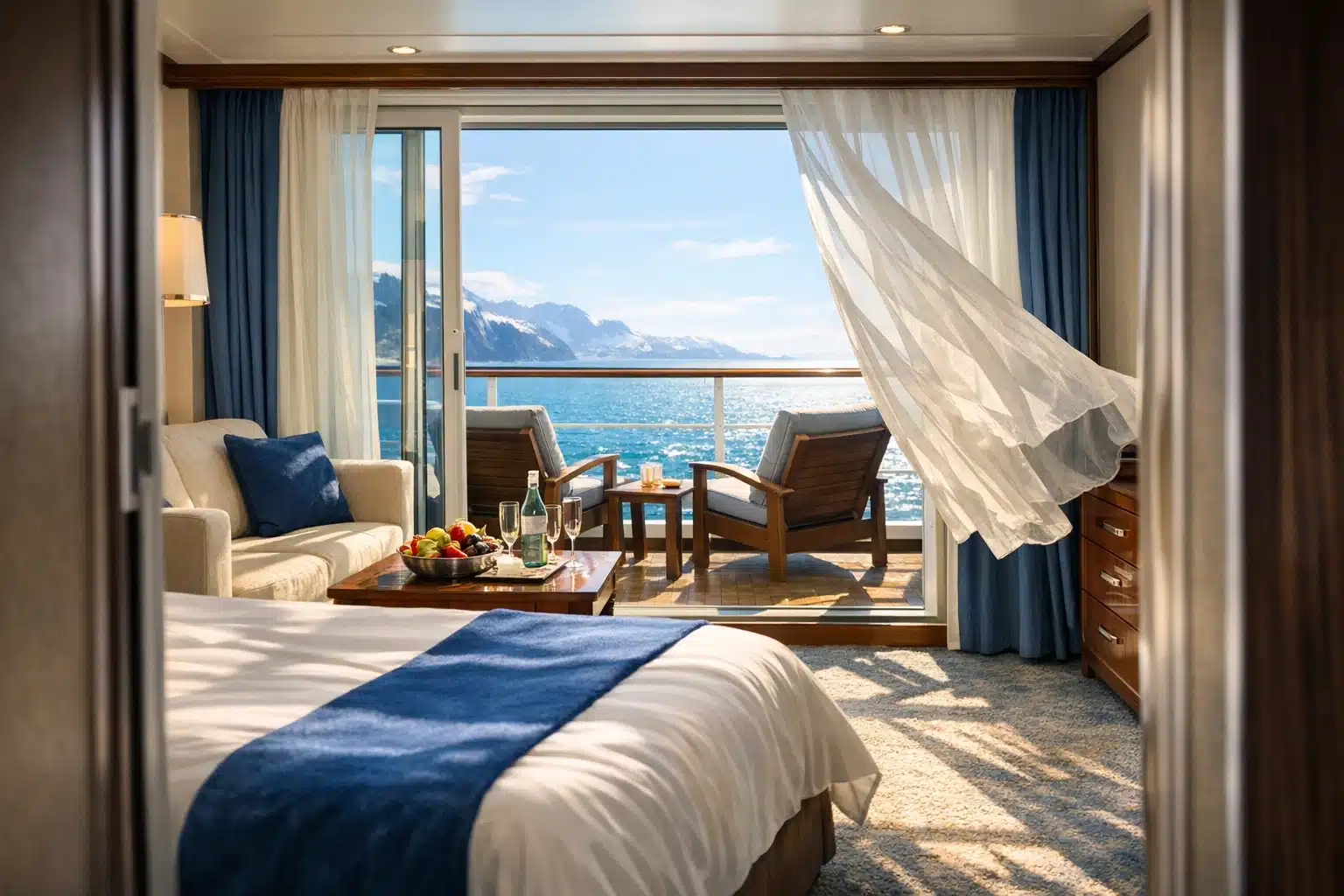
Cabin selection is the first major fork in the road. Inside cabins generally offer the lowest upfront cost and can be excellent for travelers who treat the room mainly as a place to sleep and shower. Oceanview cabins provide natural light, which some guests find worth the extra money on scenic routes. Balconies can feel especially appealing on sailings where private outdoor space adds to the trip, such as Alaska or longer voyages with many sea days. Mini-suites and higher categories offer more room and comfort, but the key question is whether you will use that extra space enough to justify the premium.
Then come packages and bundled fare types. Princess has offered fare structures that may include combinations of drinks, Wi-Fi, gratuities, and dining benefits, although the exact details can vary by ship, promotion, and booking period. These bundles can be strong value for travelers who would pay for several of those items anyway. They can also be a poor fit for guests who spend little time online, prefer simple dining, or do not drink enough to make a beverage package worthwhile. The smart move is to price both paths: the basic fare with likely add-ons, and the bundled fare with what you realistically expect to use.
Do not overlook shore expenses. Excursions, local transportation, and meals in port can add up quickly on itineraries with many stops. The same is true for travel insurance, airport transfers, and pre-cruise hotel nights. A sailing from a nearby home port may beat a cheaper distant departure once these practical costs are included. This is one reason experienced travelers often keep a simple budget sheet before booking.
- Choose a cabin based on how much time you plan to spend in it.
- Compare bundled fares against your actual habits, not idealized vacation behavior.
- Estimate port spending before calling a cruise cheap.
- Add air, hotel, transfer, and insurance costs to every comparison.
A cruise ship can tempt travelers with upgrades as smoothly as a piano tune drifting through an atrium at dusk. That is part of the appeal. Still, the most satisfying booking is usually the one where the spending plan matches the traveler, rather than the marketing language of the day.
5. A Simple Comparison Framework and Final Takeaway for 2026 Travelers
If you want to narrow several Princess Cruises deals into one confident choice, use a comparison framework that gives each option a fair test. Start with a simple table. List the sailing date, ship, itinerary length, embarkation port, cabin category, total cruise fare, taxes and fees, package cost if applicable, airfare estimate, hotel cost, transfer estimate, and a realistic onboard budget. Once those numbers are visible together, many flashy promotions lose their mystery. What remains is a much clearer view of which itinerary truly fits your priorities.
Next, score the non-financial factors. A low total price does not help much if the schedule is inconvenient or the route does not excite you. Give each option a score for port appeal, sea-day balance, flight convenience, cabin desirability, and overall trip rhythm. Some travelers even use a five-point scale. That may sound overly methodical for a vacation, but it prevents common mistakes such as booking a bargain sailing with awkward flights, minimal time in preferred ports, or a cabin type you may regret once onboard.
This approach is especially useful for different traveler profiles:
- Budget-conscious couples may prioritize total trip cost and shoulder-season departures.
- Families often care more about date certainty, cabin location, and simplified logistics.
- First-time cruisers may prefer classic seven-night itineraries with familiar port patterns.
- Experienced cruisers may place extra value on unique routing, scenic days, or longer voyages.
- Retirees with flexibility can often take advantage of less crowded sailing periods.
As a final check, ask one practical question: if two cruises were priced the same, which one would you actually be happier taking? That answer reveals whether you are choosing based on fit or simply reacting to a sale label. The strongest deal is not always the cheapest, the longest, or the one with the boldest promotional language. It is the sailing that aligns most closely with your budget, your available time, and the kind of holiday you want to remember well.
Conclusion: Choose the Cruise That Matches the Way You Travel
For travelers comparing 2026 options, the smartest path is to look past the first fare, measure the complete cost, and weigh that against itinerary quality and personal travel style. Princess Cruises offers enough variety that two similar-looking deals can deliver very different experiences once ports, pacing, and inclusions are examined carefully. If you build a shortlist, compare like for like, and stay honest about the extras you will really use, you are far more likely to book a trip that feels satisfying from deposit day to disembarkation morning. In other words, aim for the cruise that makes sense on paper and feels right in practice.